


Bilingual Arabic and English Websites: SEO and UX Best Practices for the UAE
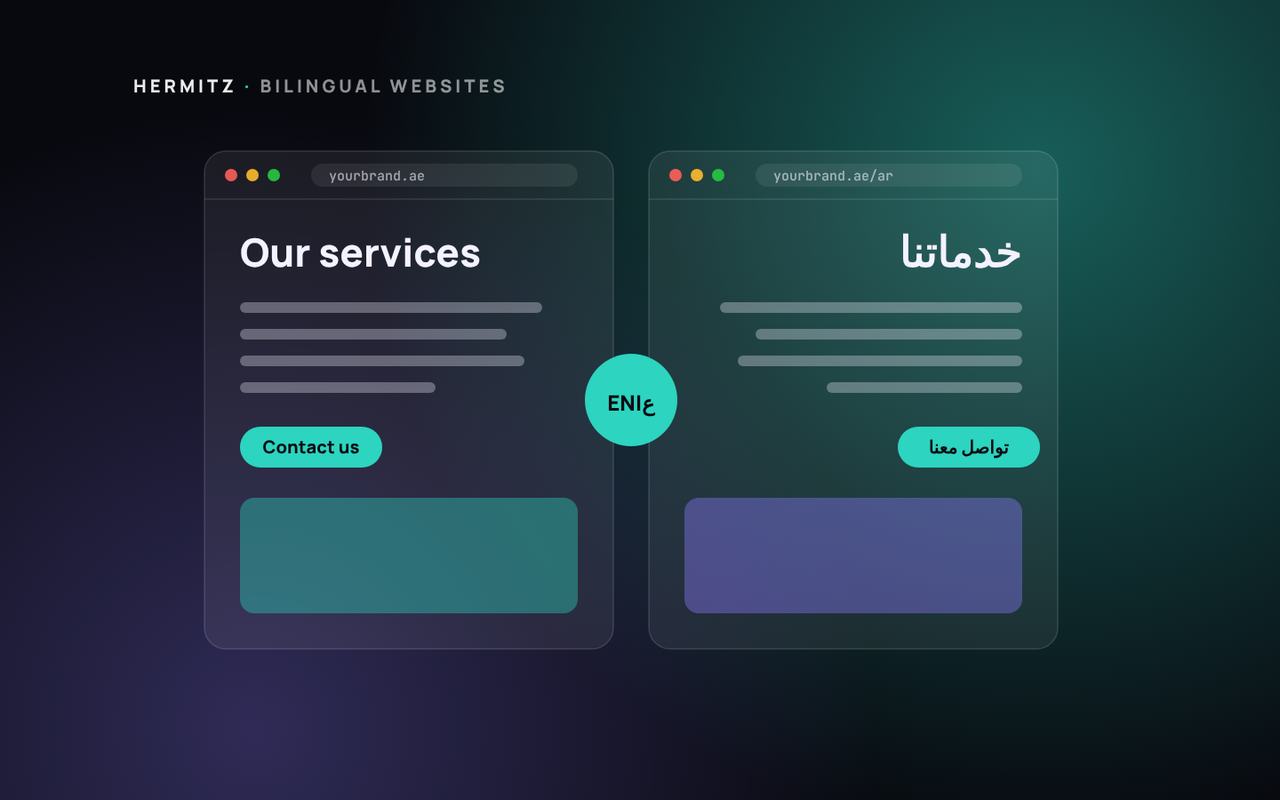
An Arabic version of your site can open a large audience that your competitors ignore, but only if it is built properly. Here is how to structure, design and optimise a bilingual website.
/ Table of contents:
- Structure: one site, two languages
- Tell search engines about both versions
- Right-to-left design is more than flipping text
- Translation that sounds natural
- Arabic keyword research
- Local signals in both languages
- A checklist before launching the Arabic version
- Measuring the Arabic site separately
- Keeping both languages in sync
- How Hermitz can help
Many UAE websites are English-only, or have an Arabic version that was machine-translated and forgotten. A well-built Arabic version can reach customers across the UAE and the wider GCC who search, read and buy in Arabic.
Structure: one site, two languages
Use a clear structure for each language, for example:
- `/en/` and `/ar/` folders on the same domain, or
- English at the root and Arabic in `/ar/`.
Folders keep your domain's authority together and are easier to manage than separate domains. Every page should have its counterpart in the other language where it makes sense.
Tell search engines about both versions
- Add hreflang tags that link each English page to its Arabic version, and back again, for example `en-AE` and `ar-AE`, plus an `x-default` page.
- Give each version its own title, description and headings written in that language.
- Include both versions in your XML sitemap.
- Do not automatically redirect visitors by browser language. Offer a clear language switcher instead, so both people and search engines can reach every version.
Right-to-left design is more than flipping text
- Set `dir="rtl"` and `lang="ar"` on Arabic pages.
- Mirror the layout: navigation, icons with direction, sliders and progress steps.
- Keep numbers, phone numbers, prices and product codes readable.
- Choose an Arabic typeface that matches your brand and is legible on phones.
- Test forms, validation messages and checkout fully in Arabic.
Translation that sounds natural
Machine translation is a useful first draft, but customers notice when Arabic reads unnaturally. Have a native speaker adapt key pages, especially headlines, calls to action, legal text and anything about prices. Keep brand and service names consistent across both languages.
Arabic keyword research
People do not always search for the literal translation of your English keywords. Research how customers actually search in Arabic, including Gulf dialect terms and English words commonly written in Arabic script. Each language deserves its own keyword plan.
Local signals in both languages
Add your business name, address and services in Arabic to your Google Business Profile where appropriate, and use structured data on both versions. AI assistants also answer questions in Arabic, so clear, factual Arabic content helps them describe your business accurately. See our GEO guide.
A checklist before launching the Arabic version
- Every important page has an Arabic counterpart, written for Arabic readers.
- Titles, descriptions and headings are in Arabic on Arabic pages.
- Hreflang tags link each pair of pages in both directions.
- The language switcher leads to the equivalent page, not the home page.
- Forms, error messages, emails and WhatsApp replies work in Arabic.
- Images with text have Arabic versions where needed.
- The Arabic site is included in your sitemap and analytics.
Measuring the Arabic site separately
Set up reporting so you can see Arabic traffic, rankings and enquiries on their own. In Google Search Console you can filter by page path, and in analytics by page or language. This shows whether the investment is paying off and which pages to improve next.
Keeping both languages in sync
The most common problem with bilingual sites is that the Arabic version falls behind: old prices, missing services, outdated offers. Make updating both languages part of every content change, assign responsibility, and review the Arabic site regularly with a native speaker.
How Hermitz can help
We design and build bilingual websites with proper right-to-left layouts, hreflang and Arabic SEO. See web development in Dubai and SEO services in Dubai.
Frequently asked questions
Will an Arabic version of our website improve SEO?
It lets you rank for searches made in Arabic, which an English-only site cannot do well. Results depend on proper structure, hreflang and natural Arabic content.
Is machine translation enough for an Arabic website?
It is a reasonable starting point for long reference content, but key pages should be adapted by a native speaker so they read naturally and build trust.
Newsletter
Get new articles by email
Occasional articles on websites, software, AI and search, from our team in Dubai. About once a month, no spam.
Keep reading
More insights
Partner programme
Earn money by referring clients
Know a business that needs a website, software, an app, SEO or AI? Introduce them to Hermitz and earn commission when they pay. Commission up to 15%.